
Locksmith service
Key Cutting & Key Services Melbourne
Keys are consumable. They wear, bend, and eventually start damaging the lock they were made for. Having enough good keys — and replacing tired ones before they cause harm — is one of the least expensive things you can do for your hardware.
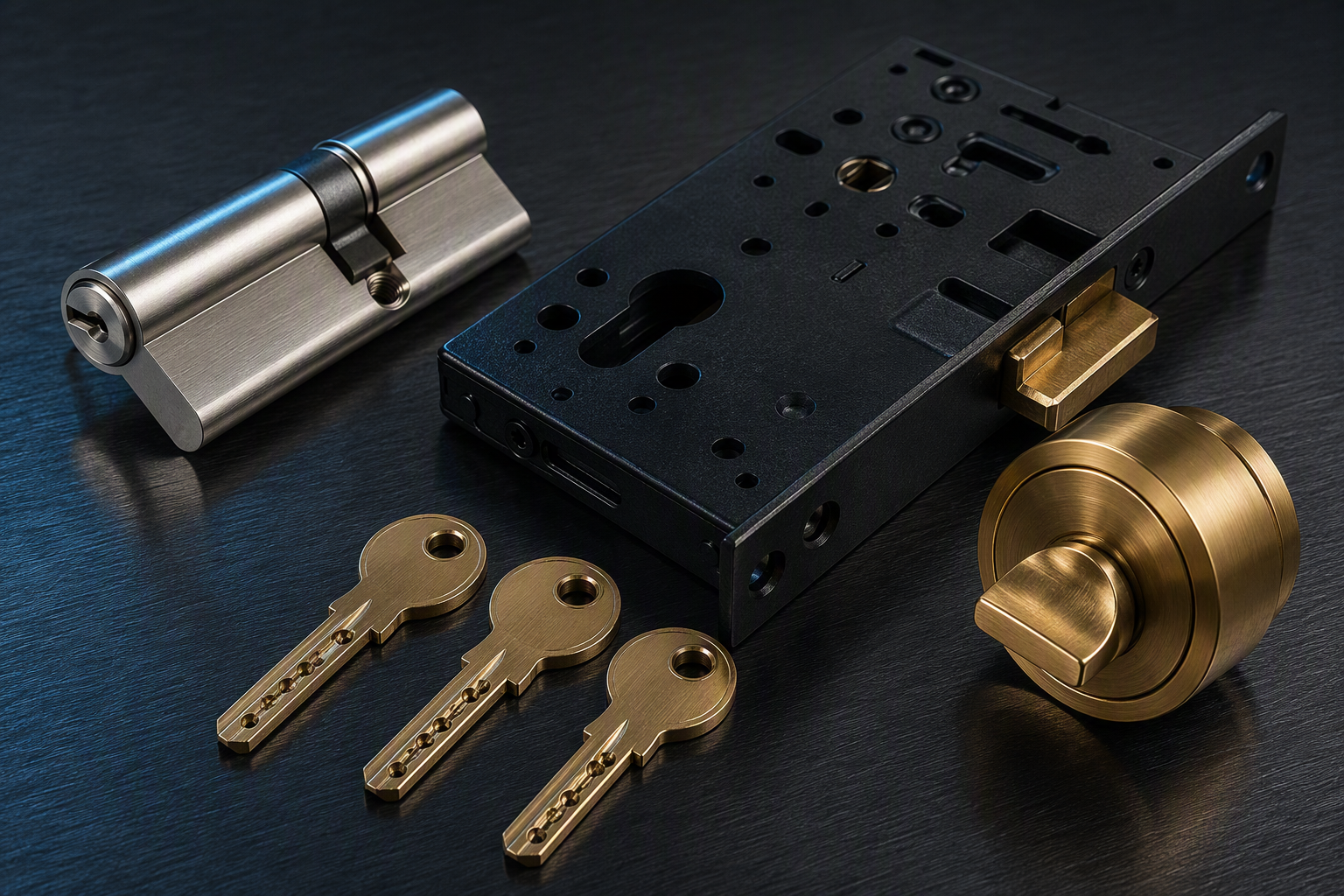
Key work covers additional keys for locks you already have, replacements for worn or lost keys, keys for newly fitted hardware, and honest guidance when a key belongs to a restricted system that cannot simply be copied.
What this usually involves
- Additional keys for existing residential and commercial locks
- Replacing worn, bent or damaged keys
- Keys supplied with newly installed or rekeyed hardware
- Matching keys across compatible locks
- Advice on restricted and patented key profiles
- Guidance on sensible key control for households and small businesses
Why a worn key is a problem worth fixing
Key cuts are precise. As a key wears, its cuts shallow and its edges round, so it no longer lifts the pins in a cylinder to the correct heights. The result is a key that needs jiggling — and, over time, accelerated wear inside an otherwise healthy lock.
It is also a poor idea to keep copying from a worn key, because each copy inherits and compounds the wear. A copy taken from an original, or a key cut to the lock itself, produces a far better result.
Restricted and patented keys
Some keys are deliberately difficult to duplicate. Restricted and patented profiles use controlled blanks that are not sold openly, and copies can only be produced with authorisation from the system holder. Apartment building keys and many commercial systems work this way.
If a key is stamped "do not duplicate", carries a system identifier, or came with an authorisation card, it is almost certainly restricted. Additional copies need to be requested through the owners corporation, building manager or system holder. That control is the whole point of the system, and it protects you as much as anyone else.
Sensible key control at home and at work
Key control does not require a spreadsheet, just a habit. Know how many keys exist for each door, keep a spare somewhere genuinely secure rather than under a mat or in a meter box, and treat an unreturned key as a live issue rather than an inconvenience.
For small businesses, a written record of who holds which key takes minutes and removes the guesswork later. It is also the fastest way to know whether a rekey is needed after someone leaves.
When new keys are not enough
If a key is missing rather than worn, cutting a replacement does not solve the underlying problem — the missing key still opens the door. In that situation rekeying is the appropriate response, because it stops the unaccounted key from working.
Similarly, if a key turns but the lock feels unreliable, the issue may sit inside the cylinder. A new key will not fix a worn mechanism.
Questions about key services
- Can you cut extra keys for my existing locks?
- In most cases yes, provided the key is not a restricted or patented profile requiring authorisation from the system holder or building manager.
- Why does my new key stick when the old one works?
- A copy taken from an already worn key inherits that wear. Cutting from an original key, or to the lock itself, generally produces a key that operates smoothly.
- I have lost my only key. Should I get a new key cut?
- A lost key is a security issue rather than a key-cutting issue. Rekeying the lock is the appropriate response, because it stops the missing key from working and provides you with new keys.
- Why can my apartment building key not be copied?
- Building keys are usually part of a restricted system. Copies must be authorised through the owners corporation or building manager, which is what stops keys to shared entrances circulating uncontrolled.
Talk to us about key services
Describe the door and the hardware, and Kim Locksmith Melbourne Service will explain the realistic options before anything is agreed.
Kim Locksmith Melbourne Service
119 Kavanagh St, Southbank VIC 3006