Blog
Garage Door Opener Not Working? Melbourne Guide
Garage door opener not working? Safe checks for remotes, power, safety beams and limits, plus the signs it is really a spring or door fault. Melbourne guide.
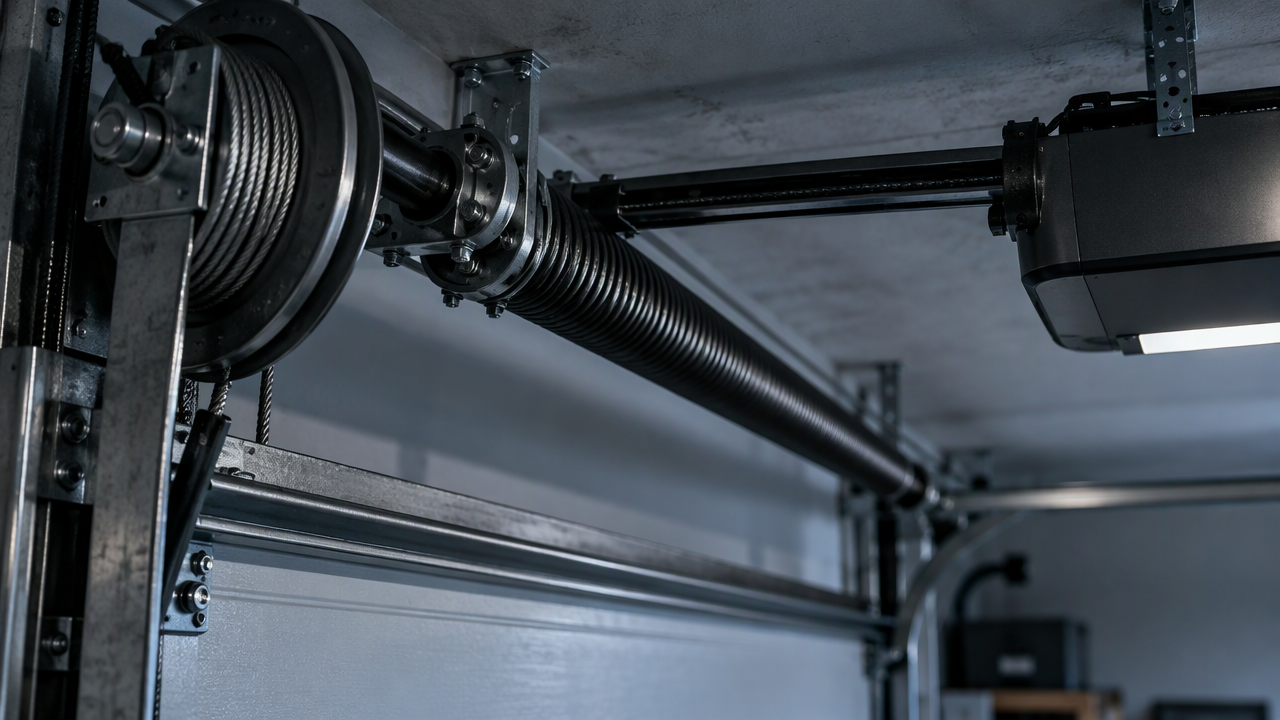
When an automatic garage door stops working, the motor usually gets the blame. Sometimes that is fair. But many "opener" problems are caused by something simpler, like a flat remote battery or a knocked safety beam, or by a fault in the door itself, like a weak spring. This guide walks through the safe checks you can do yourself, explains what different symptoms usually mean, and tells you when to stop and call for help.
Start with the simple things
Before assuming the worst, check these. They are safe and often solve the problem.
Does the wall button work?
If the wall button opens the door but the remote does not, the problem is almost certainly the remote: a flat battery, a damaged remote, or a remote that has dropped out of the opener's memory. Try a new battery first. If you have a spare remote, try that too. See garage door remotes for replacements and programming.
Is there power?
Check that the opener's light comes on and that the power point is switched on. A tripped circuit breaker, a loose plug, or a power cut will stop everything. Some openers have battery back-up, which may have run flat after a long outage.
Is the door locked?
A manual lock or slide bolt left engaged will stop the door moving. Some openers also have a "vacation" or lock mode on the wall button that disables remotes.
Is the opener disengaged?
If someone has pulled the manual release cord, the trolley is disconnected from the door. The motor will run, but the door will not move. Re-engaging it is usually a matter of running the opener until the trolley reconnects, following the manufacturer's instructions.
The door reverses before it closes
This is one of the most common complaints, and it usually means the opener thinks something is in the way. Check:
- Safety beams. These small sensors near the bottom of the door on each side must face each other. If one has been knocked by a bin, bike or car, the beam is broken and the door reverses. Look for an indicator light on each sensor; a blinking or off light often means misalignment. Clean the lenses with a soft cloth.
- Obstructions. Leaves, a doormat, a hose or ice on the floor can trigger the reverse.
- Close limit. If the opener's close limit is set too low, the door hits the floor before the opener expects it, and it reverses. Limits need adjusting according to the manufacturer's instructions, and are often best left to a technician.
- Door resistance. If the door is binding in its tracks or the springs are weak, the opener may sense too much force and reverse for safety.
Never disable safety beams or the auto-reverse to "fix" the problem. They are there to protect people, pets and cars.
The motor hums but the door does not move
A humming motor with no movement often points to:
- A stripped drive gear inside the opener.
- A disengaged trolley after someone pulled the release.
- A door too heavy to lift, usually because a spring has broken.
Stop pressing the button. Running a motor that cannot move the door can overheat it. With the door closed, you can carefully check whether the door is very heavy by hand; if it is, the springs need attention. See our guide to broken garage door springs.
The door stops part-way
Openers have a force setting that tells them when to stop. If the door is stiff, binding or heavy, the opener reaches that limit and stops part-way. This looks like a motor fault but is usually a door fault: worn rollers, a bent track, or a tired spring. Turning the force up to make the door move is not the answer; it hides the problem and reduces the safety margin.
The opener is noisy
Grinding or rattling from the motor can be worn gears, a loose chain or a worn belt. But much garage door noise actually comes from the door: dry or worn rollers and hinges on a sectional door, or a curtain dragging in its guides on a roller door. A garage door service usually identifies which.
Nothing happens at all
If there is power, the remote and wall button do nothing, and there is no hum, the fault may be electrical: a failed circuit board, transformer or motor. This needs a technician.
The safe test that tells you a lot
With the door fully closed, pull the manual release and try lifting the door by hand about halfway. A well-balanced door should feel reasonably light and stay roughly where you leave it.
- If it is very heavy or drops quickly, the springs are the problem, not the opener.
- If it binds or catches, the tracks, rollers or guides need attention.
- If it moves smoothly, the fault is more likely in the opener.
Only do this with the door closed, and if the door feels very heavy, do not keep lifting it. Lower it gently and call.
When to stop and call
Call for help rather than continuing if:
- You heard a bang and the door is now heavy.
- A cable is loose or the door is crooked.
- A sectional door is out of its tracks.
- The motor smells hot or there is any sign of burning.
- The fault is electrical.
Repair or replace the opener?
Openers are often worth repairing when one part has failed on a unit that is otherwise sound. Replacement makes sense for very old openers, units where parts are unavailable, or openers that are undersized for the door. Either way, the door should be balanced first so the opener is not working against it. More detail is on our garage door opener repair page.
Get help in Melbourne
Kim Locksmith Melbourne Service repairs garage door openers and doors across inner Melbourne from 119 Kavanagh St, Southbank. We are open 7 days, 7:00am to 9:00pm. Call 03 4059 7723 or request a quote with the opener brand and a description of what it is doing.