Blog
Deadlatch vs. Deadbolt: Understanding Australian Lock Terminology
Confused about deadlatches and deadbolts for your Melbourne property? Learn the key differences, security features, and how to choose the right lock for optimal door security in Australia.
When considering your property's security in Melbourne, you've likely encountered terms like "deadlatch" and "deadbolt." While often used interchangeably by the general public, these two types of locks offer distinct mechanisms and levels of security. Understanding the fundamental differences between a deadlatch vs deadbolt Australia is crucial for making informed decisions about your home or business's protection.
Many property owners are unaware of the specific functions of each, leading to potential security vulnerabilities or unnecessary expenses. At Kim Locksmith Melbourne Service, we believe in clear communication and helping our clients understand their hardware. This guide will clarify the unique roles of deadlatches and deadbolts, explaining how they work, their respective security benefits, and which might be best suited for various applications around your Melbourne property. Knowing the right terminology empowers you to assess your current security and discuss potential upgrades effectively.
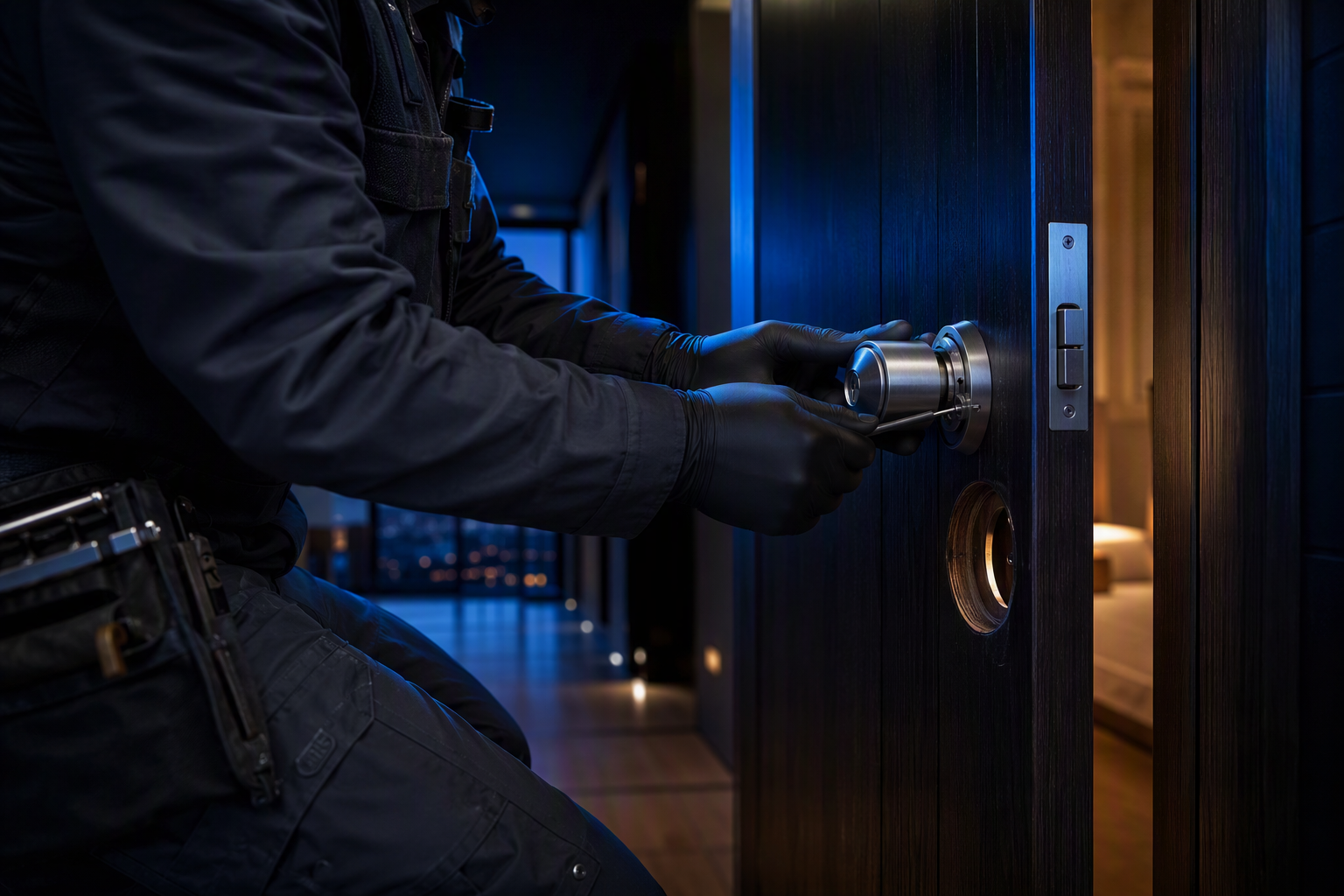
How a Deadlatch Provides Security
A deadlatch, often simply called a "latch" or "auto-latching bolt," is a common component found in many door locks, particularly on apartment entry doors or internal access points. Its primary characteristic is the bevelled bolt that retracts when the door closes, then springs back into the strike plate, automatically securing the door without requiring a key or manual turn. This mechanism makes it convenient for everyday use, ensuring the door is always latched shut.
The "dead" aspect of a deadlatch comes from a small, additional plunger or guard bolt located near the main latch bolt. When the door is closed correctly, and the main latch extends into the strike plate, this plunger is depressed against the door frame. This action "deadlocks" the main latch, preventing it from being pushed back or "shimmied" open using a card or similar tool from outside. This feature significantly enhances security compared to a standard spring latch. However, a deadlatch primarily prevents opportunists from quickly pushing the door open; it offers moderate resistance against forced entry attempts due to its internal spring mechanism.
The Strength and Function of a Deadbolt
In contrast to a deadlatch, a deadbolt provides a much higher level of security, making it a preferred choice for main entry doors in residential and commercial properties across Melbourne. A deadbolt operates without any spring mechanism; its solid, often rectangular, bolt is manually extended into the door frame's strike plate using a key or a thumbturn. Once engaged, the bolt cannot be retracted without manually reversing the action.
The key advantage of a deadbolt lies in its resistance to forced entry. Because it lacks a spring, it cannot be "shimmied" open. Furthermore, a properly installed deadbolt, extending deep into a reinforced strike plate, makes it significantly harder to kick in, pry open, or manipulate. Deadbolts are typically made from hardened steel or brass, offering robust protection against sawing or drilling attempts. For properties seeking a strong deterrent against intruders, a deadbolt is an essential security feature, designed to withstand more aggressive attacks than a deadlatch.
Key Differences: Deadlatch vs. Deadbolt for Australian Properties
Understanding the functional distinctions between a deadlatch and a deadbolt is vital when assessing security needs for your property in Melbourne. While both serve to secure a door, their operational methods and the level of protection they offer vary significantly.
Here’s a breakdown of their main differences:
- Operation: A deadlatch is typically self-latching. As the door closes, a spring-loaded bolt automatically extends into the strike plate, locking the door. The small 'deadlocking' plunger prevents the latch from being pushed back. A deadbolt, however, requires manual operation. You must turn a key or a thumbturn to extend or retract the solid bolt, pushing it into the door frame.
- Security Level: Deadlatches offer good basic security, primarily protecting against opportunistic entry methods like "loiding" or "shimming" with a credit card. They are common on apartment doors where convenience is key, and often paired with other locks. Deadbolts provide a superior level of security. Their solid, non-spring-loaded design resists forced entry attempts like kicking, prying, and jimmying, making them much more difficult to bypass without significant force or specialised tools.
- Common Applications: Deadlatches are frequently found on interior doors, apartment entrance doors (often alongside another lock), or as part of a multi-point locking system on external doors. Deadbolts are almost universally recommended for exterior entry doors on houses, offices, and retail tenancies where maximum security is paramount.
- Vulnerability: While deadlatches protect against shimming, they can sometimes be defeated by force if not properly installed or if the door frame is weak. Deadbolts, when correctly installed with strong strike plates, are much more resistant to brute force attacks and are designed to secure your property against more determined intruders.
For those managing multi-unit residences, understanding these differences is also relevant to discussions around responsibilities. For example, in high-rise buildings, knowing what kind of lock is fitted can impact maintenance and upgrade decisions. You can learn more about this in our article on Owners Corporation vs. Private Lot: Lock Responsibility in Melbourne High-Rise Buildings.
Choosing the Right Lock for Your Property's Needs
Selecting the appropriate lock for each door on your Melbourne property involves considering various factors, including the door's purpose, the desired security level, and your budget. While a deadlatch offers convenience and sufficient security for certain internal doors or as part of a multi-lock system, a deadbolt is almost always recommended for primary entry points.
For your main front door, a combination of a robust deadbolt and a deadlatch (often integrated into a single lockset) provides both high security and daily convenience. The deadbolt offers peace of mind against forced entry, while the deadlatch ensures the door is automatically secured when closed. For back doors, garage access, or other secondary entry points, a quality deadbolt is also a wise investment. When moving into a new property, reviewing and potentially upgrading your locks is a critical step in securing your new space. Our Your Moving House Lock Checklist: Securing Your New Melbourne Home offers comprehensive advice on this.
For commercial premises, the security requirements often escalate. Restricted key systems, which combine the strength of deadbolts with enhanced key control, are often a practical choice. These systems prevent unauthorised key duplication, an important consideration for businesses with multiple staff members. Further details on these advanced security options can be found in our guide to Restricted and Master Key Systems Explained for Melbourne Properties.
Professional Lock Installation, Repair, and Rekeying with Kim Locksmith Melbourne Service
Regardless of whether you choose a deadlatch, a deadbolt, or a combination, professional installation is crucial to ensure the lock functions correctly and provides its intended level of security. A poorly installed deadbolt, for instance, might not extend far enough into the strike plate, compromising its strength against forced entry.
At Kim Locksmith Melbourne Service, we diagnose lock faults honestly before recommending a solution, whether it's a repair, rekey, or full replacement. If your existing locks are not performing as they should, or if you're unsure which type of lock would best suit your needs, our team can provide expert advice. We can assist with the installation of new deadbolts or deadlatches, repair existing mechanisms, or rekey locks to enhance security without needing full replacement. Learning How to Diagnose a Lock Fault Before Calling a Locksmith in Melbourne can also provide valuable insight into common issues.
For professional assistance with lock installation, repair, or rekeying, or to discuss the best security solutions for your Melbourne property, Contact Kim Locksmith Melbourne Service today. We are here to help you secure your premises with reliable hardware and expert workmanship.
Frequently Asked Questions
What's the main difference in how a deadlatch and deadbolt lock?
A deadlatch locks automatically when the door closes, using a spring-loaded bolt that has a small "deadlocking" plunger. A deadbolt is manually operated; you must turn a key or thumbturn to extend the solid bolt into the door frame, and it stays there until manually retracted.
Can I replace a deadlatch with a deadbolt for better security?
Often, yes. Many doors are prepared to accept both types of locks, or modifications can be made. Replacing a deadlatch with a deadbolt on a primary entry door can significantly enhance security. It's best to consult with a locksmith to assess your specific door and frame for compatibility and optimal installation.
Do apartments in Melbourne typically have deadbolts or deadlatches?
Most apartment doors in Melbourne will have a lockset that includes a deadlatch mechanism for convenience, ensuring the door is always latched. For enhanced security, many residents also install a separate deadbolt above or below the main lock.
How can I tell if my lock is a deadlatch or a deadbolt?
Observe how it locks. If the door locks by itself when closed, and the bolt retracts when you turn the handle from the inside, it's likely a deadlatch. If you need to manually turn a key or knob to extend a solid, non-spring-loaded bolt into the frame, it's a deadbolt.
Is one type of lock inherently safer than the other?
Generally, a deadbolt provides a higher level of security than a deadlatch against forced entry. Its solid, manually operated bolt is much more resistant to prying, kicking, and jimmying. Deadlatches offer good basic security against casual intrusion but are less robust against determined attacks.
Conclusion
Understanding the distinction between a deadlatch and a deadbolt is a fundamental step in making informed decisions about your property's security in Melbourne. While deadlatches offer essential auto-latching convenience and basic protection against common methods like shimming, deadbolts provide a superior, robust defence against forced entry, making them indispensable for primary access points.
At Kim Locksmith Melbourne Service, we are committed to helping you understand your security hardware and making choices that genuinely protect your home or business. Our local Southbank team can assess your current locks, explain the benefits of different options, and ensure any installation or repair is carried out with precision. For honest advice and dependable locksmith services tailored to your specific needs, don't hesitate to reach out. Secure your peace of mind by choosing the right locks, installed correctly. Contact Kim Locksmith Melbourne Service today to discuss your security requirements.