Blog
Broken Garage Door Spring: Signs, Risks and What to Do
How to tell if a garage door spring is broken, why springs are dangerous to handle, and what to do next. A safety-first guide for Melbourne homeowners.
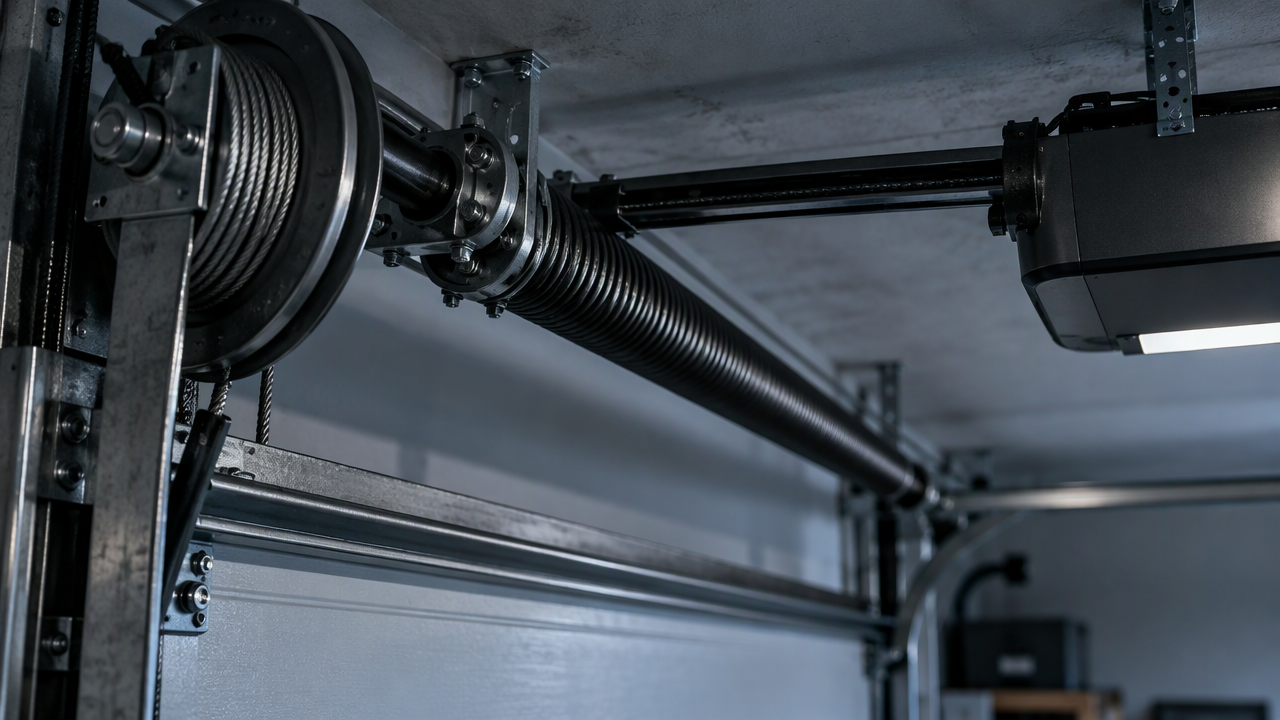
Springs are the most important part of a garage door, and also the most dangerous. They do the heavy lifting, balancing a door that can weigh as much as a small car engine so that a motor, or a person, can raise it easily. When a spring breaks, the door suddenly becomes a dead weight. This guide explains how to recognise a broken or failing spring, why you should not try to fix it yourself, and what to do while you wait for help.
What garage door springs do
On a sectional door, a torsion spring sits on a steel shaft above the opening. When the door closes, the spring winds up and stores energy; when the door opens, it unwinds and lifts the door through cables and drums at each side. Some older sectional and tilt doors use extension springs that stretch along the tracks instead.
On a roller door, springs sit inside the drum the curtain rolls onto, doing the same balancing job.
In every case, the spring is under significant tension even when the door is closed.
Signs a spring has broken
The clearest sign is a loud bang from the garage, often when nobody is using the door. Torsion springs usually break suddenly, and the release of energy is loud.
Other clear signs:
- A visible gap in the spring coil above a sectional door, often a few centimetres wide.
- The door is suddenly very heavy to lift by hand with the opener released.
- The opener strains, stops after a few centimetres or reverses straight away.
- Cables hang loose at the sides of the door.
- The door slams down rather than lowering steadily.
Signs a spring is wearing out
Springs usually give warnings before they break:
- The door is slowly getting heavier to lift by hand.
- A balanced door should stay roughly where you leave it halfway; a door with weak springs drifts down.
- The opener is slower or louder than it used to be.
- A roller door that used to lift easily now needs effort.
Springs are rated for a certain number of open-and-close cycles. A door used several times a day will reach that number sooner, so wear is normal and expected.
Why you should never adjust springs yourself
A tensioned spring stores enough energy to cause serious injury. Winding or unwinding one needs proper winding bars, the right sequence and knowledge of how many turns the door needs. Screwdrivers, a slipped bar or loosening the wrong set screw can release that energy instantly.
For that reason, we do not publish instructions for adjusting, winding or releasing garage door springs, and we strongly recommend you leave them alone. The same applies to the bottom brackets where the cables attach: they are also under tension.
What to do if you think a spring has broken
- Stop using the opener. The motor is not designed to lift the full weight of the door, and running it can strip the gears or damage the cables and tracks.
- Leave the door where it is, ideally closed. Do not try to lift a heavy door by hand.
- Keep people, pets and cars clear of the door.
- If your car is trapped inside, call and explain the situation rather than forcing the door.
- Take a photo of the spring area and note the door type and opener brand to help the technician prepare.
What a spring replacement involves
A proper spring replacement includes:
- Securing the door closed and disconnecting the opener.
- Inspecting the springs, cables, drums and bearings.
- Safely releasing any remaining tension and removing the failed spring.
- Fitting springs sized for the door's actual weight and height.
- Checking or replacing the cables at the same time, as they often wear alongside the springs.
- Balancing the door by hand, then reconnecting the opener and re-setting its force and limits.
Should both springs be replaced?
If your door has two springs, replacing both together is usually sensible. They are the same age and have done the same number of cycles, so the second one is normally close to failing too. A reputable technician should explain this rather than just doing it.
Springs and the opener
A failing spring often looks like an opener problem. As the spring weakens, the motor takes on more of the load until it overheats, strips a gear or reverses. That is why every garage door opener repair should start with checking the door's balance by hand. Replacing a motor on a door with weak springs simply wears out the new motor.
Helping springs last longer
You cannot make a spring last forever, but you can avoid shortening its life:
- Have the door serviced about once a year, or more often near the bay where salt air corrodes springs.
- Keep rollers and hinges moving freely so the door does not bind.
- Do not hang heavy objects from the door or its tracks.
- Report a door that is getting heavier early, before the spring fails.
Get spring repair in Melbourne
Kim Locksmith Melbourne Service replaces garage door springs across inner Melbourne from 119 Kavanagh St, Southbank, and we are open 7 days, 7:00am to 9:00pm. See our garage door spring repair page, or call 03 4059 7723 or request a quote.