Blog
Understanding Australian Door and Lock Terminology
Demystify Australian door and lock terminology with our comprehensive guide. Understand common lock types, hardware, and essential components used across Melbourne properties.
Have you ever found yourself nodding along to a conversation about locks and doors, secretly bewildered by terms like "deadlatch" or "mortice lock"? You're not alone. The world of door hardware and security in Australia has its own specific language, and understanding these Australian lock terms can make a significant difference when you're discussing security upgrades, repairs, or new installations for your Melbourne property. Whether you own an apartment in Southbank, a retail tenancy in the CBD, or a family home in Prahran, knowing the correct door hardware glossary can empower you to make informed decisions.
This comprehensive guide by Kim Locksmith Melbourne Service aims to demystify the common lock types explained in Australia, breaking down essential components and defining key concepts. We believe clear communication is foundational to good service. By the end of this article, you'll be well-versed in the language of locksmiths, enabling you to better understand your security needs and communicate effectively with professionals. Let's delve into the specific terminology that defines how doors are secured across Australia.
Essential Components of Australian Locks: A Breakdown
Every lock, regardless of its type or complexity, is made up of several core components that work together to provide security. Understanding these fundamental parts is the first step in comprehending the broader door hardware glossary.
The Cylinder and Keyway
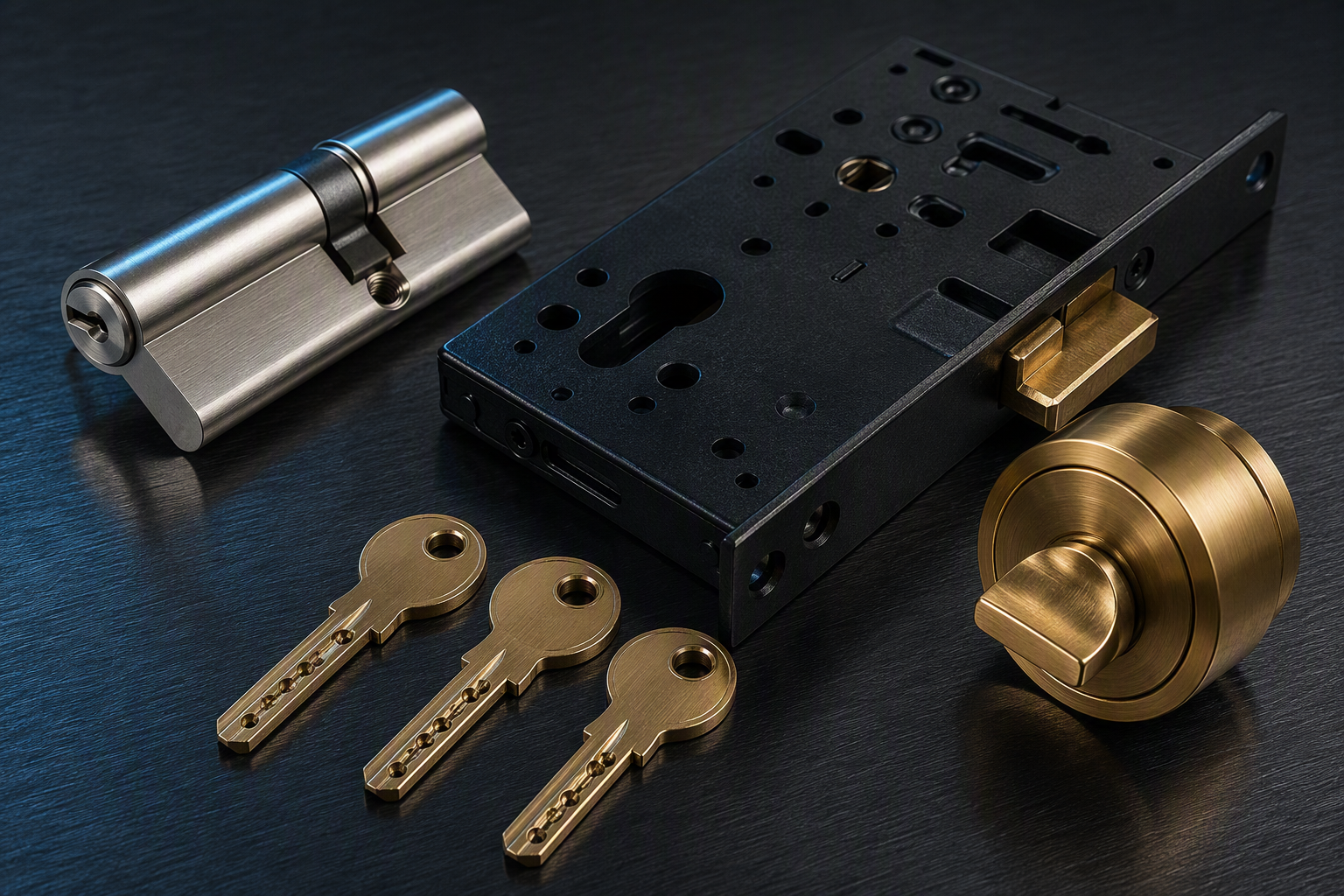
At the heart of most modern locks is the cylinder, the part where you insert the key. Inside, a series of pins or wafers align with the key's unique cuts, allowing the cylinder to turn and operate the lock's bolt. The opening where the key enters is known as the keyway. Cylinders come in various designs, such as the widely used pin tumbler mechanism. For many apartment doors and modern commercial premises in Melbourne, you'll often encounter a specific type: the Euro Cylinder. These modular units are popular for their versatility and ease of replacement.
The Latch and Bolt Mechanism
The components that actually secure the door to the frame are the latch and the bolt. A latch is typically spring-loaded, meaning it retracts when the door handle is turned and automatically extends when the door closes. It provides immediate closure but not necessarily high security. A bolt, conversely, is a solid piece of metal that extends into the door frame, providing a much higher level of security. Bolts are usually operated by a key or a turn knob from the inside. The distinction between these two mechanisms is crucial, especially when considering the security features of your door. For a deeper dive, explore our guide on Deadlatch vs. Deadbolt: Understanding Australian Lock Terminology.
Strike Plates and Keepers
While often overlooked, the strike plate and keeper are vital to a lock's function and security. The strike plate is the metal plate fixed to the door frame, housing the opening into which the latch or bolt extends. The keeper is the box or recess behind the strike plate that the bolt actually enters, providing the resistance against forced entry. For enhanced security, especially on timber doors in Melbourne, some installations include a reinforced strike plate, designed to withstand greater impact. A correctly aligned strike plate ensures the lock operates smoothly and effectively, a common point of adjustment for Kim Locksmith Melbourne Service when diagnosing lock faults.
Spindles and Followers
Connecting the door handles or knobs to the latch or bolt mechanism are the spindle and follower. The spindle is a square or rectangular bar that passes through the door and the lock mechanism. When you turn a door handle or knob, the spindle rotates the follower within the lock, which in turn retracts the latch or bolt. These components ensure the mechanical action of opening the door is smooth and reliable.
Common Door Hardware Terms Defined for Melbourne Properties
Beyond the internal workings, the external elements and types of locks themselves also have specific Australian lock terms. Familiarising yourself with these helps you identify what kind of hardware you have or might need.
Door Furniture: Handles, Knobs, and Escutcheons
In Australia, the term door furniture refers to all the hardware attached to a door's surface that facilitates its operation and enhances its appearance. This includes handles (lever handles or knob handles), escutcheons (decorative or protective plates around the keyhole or cylinder), and sometimes even door knockers or pull handles. Modern Melbourne apartments often feature stylish lever handles, while traditional homes might have classic knobs. The choice of door furniture significantly impacts both the aesthetics and accessibility of a door.
Mortice Locks vs. Rim Locks
These are two primary categories of locks distinguished by their installation method. A mortice lock is fitted into a pocket (the "mortice") cut into the edge of the door, making it concealed within the door structure. They are highly secure and commonly found in both residential and commercial settings, particularly in older buildings and [mortice locks in period homes] in Melbourne's inner suburbs like Carlton and Fitzroy. In contrast, a rim lock is mounted on the surface of the door, usually on the inside. While still offering security, they are more visible and often found as supplementary locks.
Auxiliary Locks: Barrel Bolts, Flush Bolts, and Door Chains
Auxiliary locks provide additional security beyond the main locking mechanism. A barrel bolt is a simple, surface-mounted slide bolt, often used for internal doors or gates. Flush bolts are recessed into the edge of the door, often found on the inactive leaf of a double door, offering a clean, hidden look. Door chains or security chains allow the door to be partially opened for identification while maintaining a degree of security. These additions can offer peace of mind, especially for residential homeowners and apartment residents in Southbank seeking extra layers of protection.
Specific Lock Types for Modern Melbourne Living
Melbourne's diverse architecture, from high-rise apartments to commercial tenancies, requires a range of specific lock types. Multi-point locks are often seen on apartment entry doors, engaging multiple locking points along the door frame for enhanced security. For balcony access, special attention is paid to aluminium sliding door hardware, ensuring security without compromising ease of use. Kim Locksmith Melbourne Service is experienced with the unique hardware requirements of timber, aluminium, and glass doors found across our serviced areas.
Navigating Lock Standards, Key Control, and Functionality
Understanding the terminology around lock standards and key management is crucial for optimising security and convenience for your Melbourne property. These concepts often dictate how access is managed and the level of security a system provides.
Keying Alike and Master Key Systems
The concept of keying alike means that one single key can operate multiple locks within a property. This is a popular solution for homeowners who want to reduce the number of keys they carry for their front door, back door, and perhaps a garage or shed. Kim Locksmith Melbourne Service frequently assists residential clients with keying alike services. A master key system, on the other hand, is a more complex hierarchical system primarily used in commercial properties or larger residential complexes. It allows designated "master keys" to open all locks in a system, while individual "change keys" only open specific locks. For businesses and property managers, understanding restricted and master key systems is key to effective access control.
Restricted Key Systems
A restricted key system takes security and key control to the next level. Keys for these systems cannot be duplicated by unauthorised individuals at standard key cutting shops. Instead, additional keys can only be ordered and cut by the original locksmith, usually with proper authorisation and identification, maintaining a strict record of who has access. This provides a high level of security and peace of mind for both residential and commercial clients who need to carefully manage access, such as landlords, property managers, and small business owners in Melbourne CBD and Docklands.
Functionality: Passage, Privacy, and Entrance Sets
When selecting door hardware, you'll often encounter terms describing the lock's functionality:
- Passage Set: This hardware has no locking mechanism. It simply allows the door to open and close via a latch, typically used for internal doors where no privacy is needed, like between a kitchen and dining room.
- Privacy Set: Features a simple locking mechanism, usually a push-button or turn-button from the inside, often with an emergency release on the outside. Commonly used for bathrooms and bedrooms to provide privacy.
- Entrance Set: These include a key-operated lock on the outside and often a turn-button or snib on the inside. They are designed for exterior doors and provide security against unauthorised entry.
Australian Standards and Security Ratings
While we don't claim specific certifications, it's important to note that many quality locks and door hardware sold in Australia are designed and tested to meet certain Australian Standards (AS) for security, durability, and fire resistance. These standards help ensure that products are fit for purpose and offer a baseline level of performance. Kim Locksmith Melbourne Service prioritises using reliable hardware that meets practical security needs for our clients, ensuring that any installation or replacement meets the expectations for a secure and functional outcome.
When Terminology Meets Action: Your Locksmith Questions Answered
Understanding these Australian lock terms isn't just about sounding informed; it empowers you to better understand your security setup and interact more effectively with a locksmith. When you call Kim Locksmith Melbourne Service, our aim is always to communicate clearly, explaining what needs to be done in plain language.
Diagnosing Common Lock Faults
With a clearer understanding of terms like "latch," "bolt," and "strike plate," you might find yourself better equipped to describe a problem. For instance, if your door isn't closing properly, you can now consider if the "latch isn't retracting" or if the "bolt isn't extending fully into the strike plate." This can help both you and your locksmith narrow down the issue efficiently. Before calling, it can be useful to refer to our guide on How to Diagnose a Lock Fault Before Calling a Locksmith in Melbourne, which uses some of these terms to guide your initial observations.
Repair, Rekey, or Replace: Making Informed Decisions
When a lock isn't functioning correctly or you need to change access, a common decision involves whether to repair, rekey, or replace the lock.
- Repair: Often involves fixing a faulty component, such as realigning a strike plate, adjusting a loose spindle, or lubricating the internal mechanism. This is often the most cost-effective solution if the lock's core security is intact.
- Rekey: This process changes the internal pins of a lock cylinder so that the old key no longer operates it, and a new key does. It's a sensible option when you move into a new property, have lost keys, or want to prevent previous occupants from having access, without needing to buy entirely new lock hardware. Kim Locksmith Melbourne Service frequently performs rekeying services for new homeowners and tenants across our service areas.
- Replace: A full lock replacement is necessary when the existing hardware is extensively damaged, outdated, or when you desire a significant security upgrade.
Kim Locksmith Melbourne Service prides itself on diagnosing before replacing, and explaining the repair vs. rekey vs. replace options honestly, helping you choose the most appropriate and cost-effective solution for your specific situation.
Understanding Quotes from Kim Locksmith Melbourne Service
When you receive a quote for locksmith services, having a grasp of the terminology will allow you to understand exactly what work is being proposed and what hardware is being discussed. This transparency is a cornerstone of our service. We aim to ensure that our clients, from Southbank to St Kilda, feel confident and informed about the services they are receiving, whether it's for lock installation, lock repair, or a security upgrade.
Conclusion
Navigating the world of Australian door and lock terminology doesn't have to be daunting. By understanding the essential components, common hardware types, and key control concepts, you empower yourself to make better decisions about your property's security. This knowledge forms a solid foundation for discussing your needs with professionals and ensures you're never left in the dark about the security of your home or business.
At Kim Locksmith Melbourne Service, we believe that clear communication is just as important as reliable workmanship. We're here to provide honest, straightforward advice and expert locksmith services across Melbourne's inner-city suburbs, including Southbank, Melbourne CBD, and Richmond. If you require assistance with your locks or simply have more questions about door hardware, don't hesitate to reach out.
Contact Kim Locksmith Melbourne Service today for reliable and clear locksmith solutions. Get a Quote or call us at 03 4059 7723.